Poem

Little-Teapot

I’m a Little Teapot Poem A New and Original Version

I’m a Little Teapot Poem A New and Original Version “I’m a Little Teapot” is a popular children’s song and nursery rhyme that was first published in 1939. The lyrics were written by George Harry Sanders and the music was composed by Clarence Z. Kelley. The song is a fun and interactive way for children to learn about shapes and actions. The lyrics describe the teapot as having a spout, handle, and lid, and encourage children to “tip” the teapot and “pour” the tea. The song is usually sung in English, but has been translated into many different languages and is enjoyed by children all over the world. It has also been adapted into different versions, including a remix that adds a modern twist to the classic tune. “I’m a Little Teapot” has become a cultural icon and has been featured in various media, including television shows, movies, and even

Read More »
If-You're-Happy-and-You-Know-It

If You’re Happy and You Know It Poem: New and Original version

If You’re Happy and You Know It Poem: New and Original version Origin: The origins of the “If You’re Happy and You Know It” poem are uncertain. Some sources suggest that it may have originated as a folk song in the United States or England, while others suggest it may have been adapted from a German song. The first known publication of the song was in 1952 in a book called “Silly Songs and Sing-Alongs for Everyone” by Susan Davis. Writer: The author of the poem is unknown, as it is a traditional nursery rhyme that has been passed down through generations. Meaning: The poem is a simple and fun song that encourages children to be happy and express their emotions. It is often accompanied by actions, such as clapping hands, stomping feet, and nodding heads. Language: The poem is in English and is popular in many English-speaking countries around

Read More »
Humpty-Dumpty

Humpty Dumpty Older, Extended, and New Versions

Humpty Dumpty Older, Extended, and New Versions Origin: It is not clear where the “Humpty Dumpty” rhyme came from, but it is thought that it was first written down in England in the late 18th century. Writer: Mother Goose, who wrote and collected English nursery rhymes, is often said to be the author of this song, but there is no proof to back this up. Language: The nursery rhyme is traditionally sung or recited in English. Meaning: The rhyme isn’t very clear about what it means, but most people see it as a warning about what happens when you take risks or act carelessly.All of the king’s horses and men couldn’t fix Humpty, which shows that some damage can’t be fixed. “Humpty Dumpty” is one of the best-known and most-loved nursery rhymes in English-speaking countries. It has been referenced and made fun of in many forms of popular culture, such

Read More »
Hickory-Dickory-Dock

Hickory Dickory Dock: Older and Newer Versions of a Poem

Hickory Dickory Dock: Older and Newer Versions of a Poem “Hickory Dickory Dock” is a traditional nursery rhyme that has been passed down for generations. It is believed to have originated in England, but the exact author and date of creation are unknown. The poem features a mouse that runs up a clock and the subsequent actions of the clock. The rhyme has a sing-song rhythm and is easy for children to memorize. Some interpretations suggest that the rhyme has historical significance, possibly referring to the curfew laws that were enforced in England during the Middle Ages. Others believe that it is simply a whimsical children’s rhyme with no deeper meaning. Despite its uncertain origins and meaning, “Hickory Dickory Dock” has become a beloved nursery rhyme around the world and is often taught to young children to help them learn about telling time and counting. The poem has been adapted

Read More »
Green-Eggs-and-Ham

Green Eggs and Ham Poem (Newer and Original Versions)

Green Eggs and Ham Poem (Newer and Original Versions) “Green Eggs and Ham” is a children’s book written by Dr. Seuss (Theodor Geisel) and published in 1960. The book tells the story of a character named Sam-I-Am who tries to convince another character, known simply as “the character,” to try green eggs and ham in various locations and situations. The book was written as part of a bet between Dr. Seuss and his publisher, who challenged him to write a book using only 50 words. Dr. Seuss was able to meet this challenge and the book has since become one of the best-selling children’s books of all time, selling over 8 million copies worldwide. The book’s main theme is the importance of trying new things and being open to new experiences, even if they seem strange or unappealing at first. The story also teaches children about the power of persistence

Read More »
Five-Little-Monkeys-Jumping-on-the-Bed

Five Little Monkeys Jumping on the Bed Poem

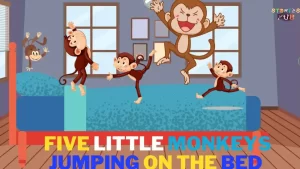
Five Little Monkeys Jumping on the Bed Poem The origin of “Five Little Monkeys Jumping on the Bed” is unknown, but it is believed to be an American nursery rhyme. The writer is also anonymous. The poem tells the story of five mischievous monkeys who jump on a bed despite their mother’s warning. One by one, the monkeys fall off and bump their heads, leading the doctor to advise against any more jumping on the bed. The poem has been popularized through children’s books, songs, and videos, and is a favorite among young children. It teaches the consequences of not listening to authority and not following rules, as well as the importance of safety and caution. The language of the poem is simple and easy to understand for young children, with repetitive lines that make it easy to memorize and sing along. Overall, “Five Little Monkeys Jumping on the Bed”

Read More »
Ding-Dong-Bell

Ding Dong Bell Poem: New and Original Versions

Ding Dong Bell Poem: New and Original Versions “Ding Dong Bell” is an English nursery rhyme that dates back to the 16th century. It is also known as “Kitty Cat” and “Ding Dong Dell”. The poem was first recorded in its modern form in 1580 by the English composer Thomas Ravenscroft in his book “Deuteromelia”. The poem tells the story of a cat named “Tommy” who catches a mouse and plays with it. However, the mouse escapes and runs away. The poem has a simple structure and is easy for children to memorize. The meaning of the poem is often debated, with some people interpreting it as a cautionary tale about the dangers of playing with animals, while others see it as a simple story about a cat and a mouse. The language of the poem is simple and easy to understand for children. It has been translated into many

Read More »
Casey-at-the-Bat

Casey at the Bat: Newer and Older Versions

Casey at the Bat: Newer and Older Versions Origin: “Casey at the Bat” is a poem written by Ernest Thayer. It was first published in the San Francisco Examiner on June 3, 1888. Writer: Ernest Thayer was an American writer and poet. He was born on August 14, 1863, in Lawrence, Massachusetts, and died on August 21, 1940. Meaning: “Casey at the Bat” is a narrative poem about a baseball team called the Mudville Nine and their star player, Casey. The poem captures the excitement and drama of a baseball game as the Mudville Nine are trailing by two runs in the bottom of the ninth inning with two outs and the bases loaded. The crowd is hopeful that Casey can deliver a game-winning hit, but he strikes out, leaving the Mudville fans devastated. Language: “Casey at the Bat” is written in English language with a meter and rhyme scheme

Read More »